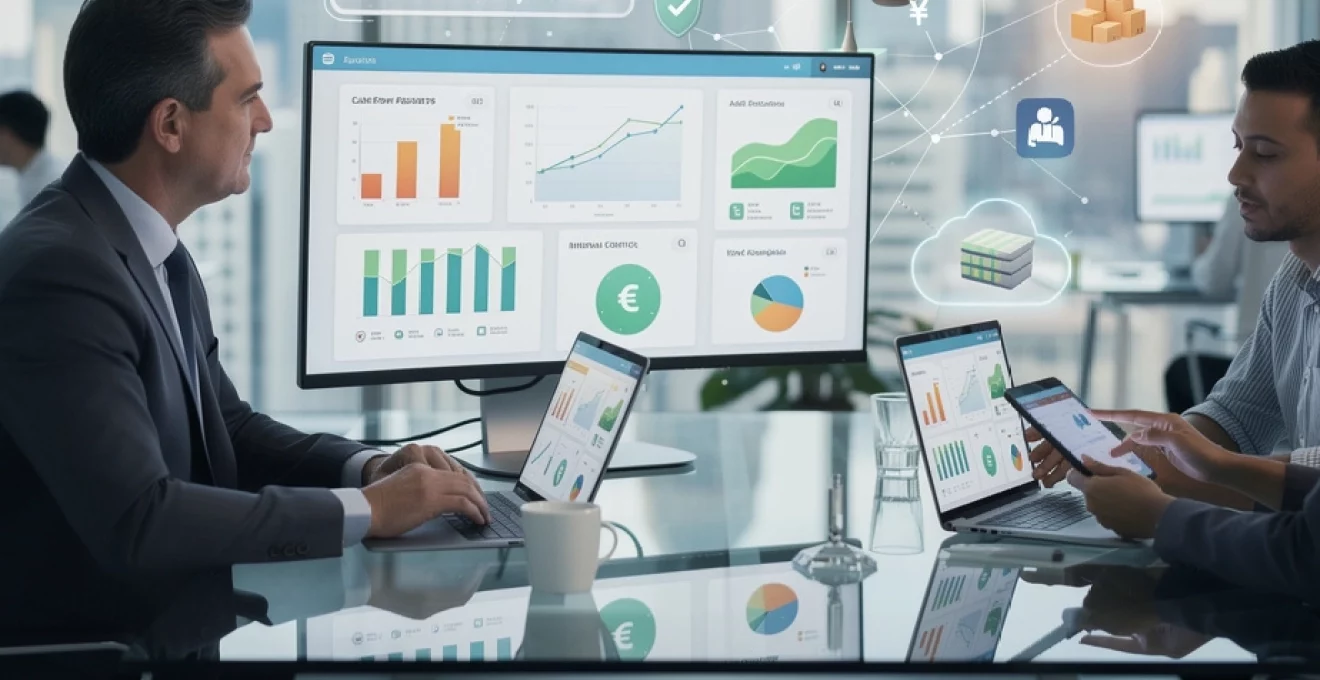
Modern businesses face unprecedented challenges in managing their financial operations, with growing companies particularly vulnerable to the complexities that arise from scaling operations. The transition from manual bookkeeping to sophisticated accounting software represents more than just a technological upgrade—it’s a strategic transformation that can determine the trajectory of business growth. Today’s accounting solutions offer far more than basic transaction recording, providing comprehensive financial management ecosystems that integrate seamlessly with existing business processes.
The evolution of accounting software has transformed how companies approach financial management, moving beyond simple data entry to sophisticated analytical tools that provide real-time insights into business performance. Growing companies require robust systems capable of adapting to increasing transaction volumes, complex regulatory requirements, and expanding operational needs. Understanding the full spectrum of benefits these solutions provide becomes crucial for businesses seeking sustainable growth and competitive advantage in their respective markets.
Cloud-based accounting solutions: QuickBooks online vs xero vs sage intacct
The landscape of cloud-based accounting solutions has matured significantly, with three major platforms dominating the market for growing businesses. QuickBooks Online continues to lead in user adoption, particularly among small to medium enterprises, offering intuitive interfaces and comprehensive feature sets that scale with business growth. Its strength lies in its extensive app ecosystem and familiar user interface that reduces training requirements for new users.
Xero has established itself as the preferred choice for businesses requiring advanced automation capabilities and superior user experience design. The platform excels in providing real-time collaboration features and sophisticated reporting tools that appeal to growth-oriented companies. Financial professionals often favour Xero for its clean interface and powerful integration capabilities with third-party applications.
Sage Intacct represents the enterprise-level solution within this comparison, designed specifically for businesses that have outgrown traditional small business accounting software. Its advanced dimensional reporting capabilities and robust financial consolidation features make it particularly suitable for companies with complex organisational structures or multiple business units.
Multi-currency transaction processing and Real-Time exchange rate integration
International business operations demand sophisticated currency management capabilities that extend beyond basic conversion calculations. Modern accounting software platforms automatically handle multi-currency transactions by integrating with real-time exchange rate feeds, ensuring accuracy in financial reporting across different markets. This functionality becomes particularly valuable for companies engaged in import/export activities or those operating subsidiary companies in multiple countries.
The automation of currency conversion eliminates manual calculation errors that could significantly impact financial statements. Exchange rate fluctuations are captured and reflected immediately in financial reports, providing management with accurate insights into foreign exchange gains and losses. This real-time processing capability enables better decision-making regarding international transactions and hedging strategies.
API connectivity for Third-Party ERP and CRM system synchronisation
Application Programming Interface connectivity has become essential for creating integrated business ecosystems where accounting software serves as the financial hub. Modern platforms offer extensive API libraries that facilitate seamless data exchange between accounting systems and enterprise resource planning or customer relationship management platforms. This integration eliminates data silos and ensures consistent information across all business systems.
The synchronisation capabilities extend beyond simple data transfer to include complex business logic and automated workflows. When a sales transaction is completed in a CRM system, for instance, the accounting software automatically creates the corresponding invoice, updates inventory levels, and adjusts customer account balances. This level of integration significantly reduces manual data entry requirements and minimises the risk of discrepancies between systems.
Automated bank reconciliation features and open banking protocol implementation
Bank reconciliation processes that once consumed hours of manual effort are now completed automatically through sophisticated matching algorithms and open banking protocols. These systems connect directly to business bank accounts, importing transactions in real-time and automatically matching them against recorded entries in the accounting system. The technology recognises patterns in transaction data, learning to categorise expenses and income more accurately over time.
Open banking implementation has revolutionised how businesses interact with their financial institutions, providing secure, standardised methods for accessing account information and initiating transactions. This connectivity enables features such as automatic bill payments, real-time cash flow monitoring, and predictive analysis based on historical banking patterns. The elimination of manual bank reconciliation not only saves time but also reduces the risk of errors that could affect financial reporting accuracy.
Scalable user access controls and Role-Based permission management
<p
provide growing companies with granular control over who can see and do what inside the accounting system. Rather than sharing a single generic login, cloud accounting platforms support role-based permission management that maps closely to your organisational structure. You can create user profiles for finance managers, departmental heads, external accountants, and operational staff, each with clearly defined access rights.
This scalable approach to user access control becomes increasingly important as your team expands and responsibilities become more specialised. For example, you might allow sales managers to view customer balances and raise invoices, while restricting access to payroll data and sensitive management reports. Audit logs record every significant action taken by each user, supporting both internal control requirements and external audit reviews. As you grow, you can add new roles, refine permissions, and ensure segregation of duties without rebuilding your accounting environment from scratch.
Financial reporting automation and real-time analytics dashboard integration
As transaction volumes increase, manually compiling financial reports becomes unsustainable for growing businesses. Modern accounting software automates routine financial reporting tasks and surfaces real-time analytics through configurable dashboards. Instead of waiting for month-end spreadsheets, you can view up-to-date performance metrics whenever you log in, often broken down by department, region, or product line.
Integrated analytics tools allow you to move from static reports to interactive visualisations that can be filtered and drilled into on demand. This shift from rear-view reporting to live financial visibility helps management teams respond quickly to emerging opportunities and risks. Real-time dashboards can display revenue trends, operating margins, debtor days, and cash positions in one consolidated view, making board meetings and investor updates far more data-driven.
Profit and loss statement generation with departmental cost centre allocation
Growing companies often struggle to understand which parts of the business are truly profitable. Accounting software addresses this by enabling departmental cost centre allocation within profit and loss statements. Transactions can be tagged to cost centres such as marketing, operations, or individual branches, allowing you to generate segmented P&L reports at the click of a button.
This approach is particularly powerful for multi-site or multi-service businesses where overheads need to be shared fairly. You can allocate common costs, such as rent or software subscriptions, using predefined rules, ensuring each department bears an appropriate share of expenses. Over time, departmental performance reporting makes it easier to identify underperforming units, optimise resource allocation, and justify strategic investments in areas with the highest return.
Cash flow forecasting models using historical data pattern recognition
Cash flow forecasting is one of the most critical capabilities for any expanding organisation. Advanced accounting platforms now apply historical data pattern recognition to predict future inflows and outflows, rather like a weather forecast built from years of climate data. Recurring invoices, seasonal sales trends, and typical payment delays are all factored into automated forecasts.
These cash flow models allow you to test different scenarios, such as accelerated hiring plans or capital expenditure, and immediately see their impact on your liquidity. Instead of relying on intuition, you can base decisions on quantified forward-looking projections. For many finance teams, this represents a shift from reactive cash management to proactive cash flow planning, reducing the risk of shortfalls and supporting more confident growth strategies.
VAT return compliance and making tax digital (MTD) API submission
For UK-based growing companies, VAT compliance and Making Tax Digital requirements add an extra layer of complexity to financial management. Modern accounting software automates VAT calculations as transactions are recorded, applying the correct rates and partial exemptions where required. When the VAT period closes, the system can generate a complete, reconciled VAT return without the need for manual recalculation.
MTD-compliant platforms connect directly to HMRC systems through secure APIs, enabling digital submission of VAT returns from within the software. This removes the need for bridging spreadsheets and reduces the risk of transposition errors. By maintaining digital links between source transactions and VAT boxes, your accounting system supports both regulatory compliance and smoother VAT inspections, giving growing companies greater confidence in their indirect tax position.
Management accounts production with key performance indicator tracking
As your organisation grows, ad hoc financial reports are no longer sufficient to guide strategy. Accounting software facilitates structured management accounts production, typically on a monthly or quarterly basis, complete with key performance indicator tracking. Standard packs might include income statements, balance sheets, cash flow statements, and variance analyses against budget.
Beyond the core financials, you can incorporate non-financial KPIs, such as customer acquisition costs, utilisation rates, or average order values, by integrating data from CRM or ERP systems. This blended reporting environment gives leadership teams a holistic view of performance, not just isolated profit figures. Over time, consistent management reporting establishes a rhythm of review and accountability that supports better governance and more informed decision-making.
Inventory management systems and stock valuation methodologies
For product-based businesses, inventory management can become a major source of cost and complexity as operations scale. Modern accounting software often includes, or integrates with, inventory management systems that track stock movements from purchase order to sale. Real-time visibility into stock levels helps prevent both stockouts and overstocking, two issues that can silently erode profitability.
From a financial reporting perspective, these systems support multiple stock valuation methodologies, including FIFO (First In, First Out), LIFO (Last In, First Out, where permitted), and weighted average cost. Choosing the right method can influence reported margins and tax liabilities, so having flexible configuration options is essential as your product range and purchasing strategies evolve. Tight integration between inventory and accounting ensures that cost of goods sold calculations are accurate, timely, and aligned with your chosen valuation policy.
Payroll processing integration: PAYE compliance and auto-enrolment pension management
As headcount grows, payroll processing quickly becomes one of the most sensitive and time-consuming aspects of financial management. Integrated payroll modules within accounting software automate gross-to-net calculations, tax deductions, and statutory reporting under the PAYE system. This not only saves time but reduces the risk of non-compliance penalties for incorrect or late submissions.
Auto-enrolment pension requirements add another layer of complexity, particularly around eligibility assessment, contribution calculations, and communication with employees. Payroll-integrated accounting software can manage these processes automatically, generating the necessary files for pension providers and updating employee records in real time. By consolidating payroll and accounting data, you gain a clearer picture of total employment costs, supporting more accurate budgeting and workforce planning.
Audit trail functionality and regulatory compliance documentation
As organisations grow and attract more scrutiny from regulators, investors, and lenders, the importance of a robust audit trail increases significantly. Accounting software captures detailed logs of every material transaction and adjustment, including who made the change, when it occurred, and what data was altered. This creates a transparent record that can be traced from source document to final financial statement.
Comprehensive audit trail functionality simplifies both external audits and internal reviews, reducing the time spent locating supporting evidence. It also underpins strong governance frameworks, helping demonstrate that your finance function operates with appropriate controls and oversight. In practice, automated documentation within the accounting system replaces stacks of paper files and disconnected spreadsheets, making regulatory compliance an integrated part of day-to-day operations.
Companies house filing integration and statutory account preparation
For UK limited companies, preparing statutory accounts and filing with Companies House can become a significant annual workload. Many accounting platforms now offer tools that map your ledger data directly to statutory formats, supporting the production of compliant year-end financial statements. These tools apply the relevant disclosure requirements and formats for small, medium, or large entities, depending on your size.
Some solutions extend this capability further with direct Companies House filing integration, enabling electronic submission of accounts and confirmation statements from within the platform. By reducing manual re-keying and file handling, you lower the risk of filing errors and missed deadlines. Over time, streamlined statutory reporting helps finance teams focus less on mechanics and more on analysing the numbers behind the filings.
GDPR data protection protocols for financial information storage
With financial systems holding highly sensitive personal and corporate data, compliance with GDPR and broader data protection requirements is non-negotiable. Cloud-based accounting software providers typically implement strong security measures, including encryption at rest and in transit, multi-factor authentication, and strict access controls. Data residency options and retention policies can be configured to align with your organisational obligations.
From a practical standpoint, using a reputable accounting platform can improve your GDPR posture compared to ad hoc spreadsheets stored across multiple devices. Centralised data management makes it easier to respond to data subject access requests, manage permissions, and document lawful bases for processing. Embedding privacy by design within your accounting processes not only reduces regulatory risk but also builds trust with customers, employees, and stakeholders.
Internal control framework implementation for fraud prevention
As transaction volumes and staff numbers grow, the potential for error and fraud inevitably increases. Accounting software supports internal control frameworks by enforcing segregation of duties, approval hierarchies, and automated checks. For example, you can require dual approval for payments above a certain threshold or restrict the ability to create new suppliers to specific roles.
Automated alerts and exception reports can highlight unusual activity, such as duplicate payments, changes to bank details, or journals posted outside normal patterns. These features act as a digital early warning system, making it harder for fraudulent or unauthorised transactions to go unnoticed. By leveraging system-enforced controls rather than relying solely on manual oversight, growing companies can maintain strong financial integrity even as complexity increases.
Cost-benefit analysis: implementation expenses vs manual bookkeeping overheads
Investing in accounting software inevitably raises questions about cost, particularly for businesses transitioning from manual bookkeeping or basic spreadsheets. Implementation expenses can include subscription fees, initial setup, data migration, and staff training. At first glance, these may appear higher than the visible costs of a simple manual system.
However, a thorough cost-benefit analysis typically reveals significant savings once automation, error reduction, and time efficiencies are factored in. Manual bookkeeping often hides costs in staff hours, rework due to mistakes, delayed information, and missed opportunities caused by poor visibility of financial data. When you quantify these overheads, the return on investment for a modern accounting platform becomes much clearer.
Beyond direct financial benefits, accounting software supports strategic advantages that are harder to price but crucial for growth. Faster reporting, better cash flow forecasting, and improved compliance all contribute to lower risk and higher agility. In many cases, the question shifts from “Can we afford accounting software?” to “Can we afford not to modernise our financial systems?”—especially for companies aiming to scale sustainably in an increasingly data-driven business environment.